Why India needs uniform strategy for equitable access to Cancer treatment, experts explain
 (No Ratings Yet)
 Loading...
In the backdrop of observation that India may emerge as the Cancer Capital of the World, the health experts assert that the country needs a coordinated national approach to bridge the gap between breakthrough cancer treatments and patient access, ensuring that scientific advances benefit every eligible patient, leading oncologists, cancer survivors and public health experts said today.
While remarkable progress has been made in the treatments, access continues to be constrained by affordability, limited insurance coverage, inadequate diagnostic facilities and disparities in healthcare infrastructure, underlined the health experts.
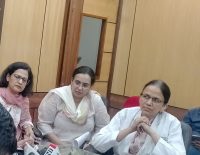
In a roundtable on “Bridging Innovation and Affordability in Cancer Care” organised by the Indian Cancer Society (ICS), Mrs Jyotsna Govil, Chairperson of the society said cancer care is entering a new era of scientific innovation and the real challenge is to ensure that these advances reach every patient who can benefit from them. “Through dialogues like these, we hope to encourage informed public conversations that help improve access to quality cancer care while keeping patients at the centre of every decision,” she said.
Experts agreed that India does not have to choose between innovation and affordability. Instead, they stressed that public resources should focus on therapies that deliver the greatest public health impact.
Calling for evidence-based prioritisation of cancer therapies, Dr Ravi Mehrotra, Management Committee Member, Indian Cancer Society and former Director of the National Institute of Cancer Prevention and Research (NICPR), said such an approach would ensure that limited healthcare resources generate the maximum benefit. “India does not have to choose between innovation and affordability. Evidence-based prioritisation, supported by scientific evaluation and real-world evidence, can help ensure that scientific advances translate into meaningful health gains for the largest number of patients,” he said.
Highlighting the rapid evolution of cancer treatment, Dr Ajay Gogia, Professor of Medical Oncology at Dr B.R.A. Institute Rotary Cancer Hospital (IRCH), AIIMS New Delhi, said the future of oncology lies in giving every patient the most appropriate treatment rather than simply the newest treatment. “Precision medicine, supported by scientific evidence and appropriate patient selection, enables us to improve outcomes while making better use of healthcare resources. Evidence-based optimisation of treatment can also help improve affordability. Innovation achieves its true value only when patients can access it,” he said.
Speaking about India’s growing role in advancing cancer research, Dr (Prof) Jyoti Wadhwa, Principal Lead of Medical and Precision Oncology at Apollo Athenaa Women’s Cancer Centre & Apollo Hospital, Delhi said the country has enormous potential to become a global leader in oncology research because of its clinical expertise and diverse patient population. “Greater collaboration in clinical research will help improve future standards of care while generating evidence that reflects India’s healthcare realities and expands access to innovative therapies including biosimilars,” she said.
The discussion also highlighted the need to strengthen public financing, evidence-based reimbursement mechanisms and healthcare infrastructure so that scientific innovation reaches patients in an equitable and sustainable manner. According to Dr Pragya Shukla, Head of Clinical Oncology at Delhi State Cancer Institute, investments in these areas will play an important role in translating scientific advances into better patient outcomes. “Our fight against cancer cannot be considered successful until the recommended treatment reaches even the poorest of the poor. Scientific advances achieve their true purpose only when every patient who needs them has a fair opportunity to receive them,” she said.